Formula 1 Explained: Essential Concepts for Beginners
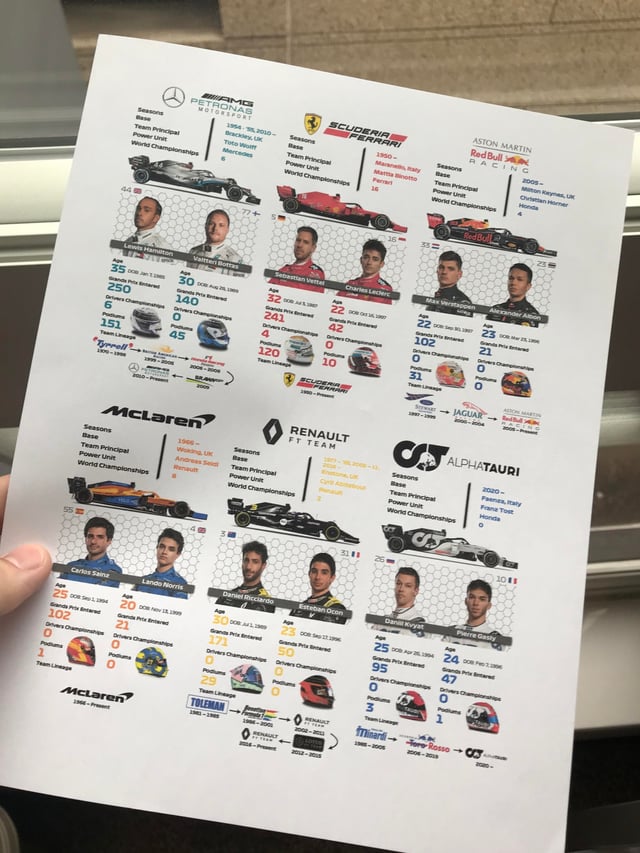
Stepping into the high-octane world of Formula 1 can feel like trying to solve a complex puzzle at 200 mph. With its intricate rules, specialized terminology, and lightning-fast strategies, it’s easy for newcomers to feel overwhelmed. But fear not! This article is designed to be your ultimate formula 1 cheat sheet, breaking down the core concepts into easily digestible insights. Whether you're just starting to tune in or looking to deepen your understanding, we'll equip you with the essential knowledge to appreciate the pinnacle of motorsport.
The Thrill of Formula 1: More Than Just Racing
Formula 1 isn't merely about cars driving in circles; it's a breathtaking blend of cutting-edge engineering, athletic prowess, strategic genius, and a healthy dose of drama. Governed by the Fédération Internationale de l'Automobile (FIA), F1 represents the highest class of international auto racing for open-wheel single-seater formula racing cars. Each season, teams and drivers battle across the globe, pushing the limits of technology and human endurance to claim one of two coveted titles: the Drivers' World Championship and the Constructors' World Championship.
Unpacking the Grand Prix Weekend: Your Formula 1 Cheat Sheet for Race Day
A Formula 1 Grand Prix isn't just a Sunday race; it's a multi-day event packed with action, culminating in the main event. Understanding the flow of a weekend is crucial for any budding fan.
From Practice to Pole: The Road to Race Day
- Practice Sessions (Free Practice 1, 2, & 3): Typically held on Friday (and Saturday morning), these sessions allow teams and drivers to familiarize themselves with the track, test car setups, and gather crucial data. There's no points awarded, but performance here can hint at weekend potential.
- Qualifying (Q1, Q2, Q3): This is where the grid for Sunday's race is determined. Held on Saturday, qualifying is a thrilling elimination-style shootout:
- Q1: All 20 cars participate, with the five slowest cars eliminated after a set time.
- Q2: The remaining 15 cars compete, and again, the five slowest are eliminated. A crucial strategic element here is that drivers starting the race in the top 10 must use the tire compound they set their fastest Q2 lap on (barring wet conditions).
- Q3: The fastest 10 drivers battle for pole position (P1, the very front of the grid). This is often a nail-biting session, showcasing raw speed.
Insider Tip: Pole position is incredibly valuable, especially on tracks where overtaking is difficult.
- The Race: Sunday is showtime! Drivers line up according to their qualifying positions, and after a formation lap, the five red lights go out to signal the start of the Grand Prix.
Key Race Elements: Strategy and Execution
- Pit Stops: A synchronized ballet of mechanics, a pit stop involves changing tires and making minor adjustments to the car in a matter of seconds. Strategy is key here:
- Tire Compounds: Pirelli supplies several tire types:
- Slick Tires: Hard (white), Medium (yellow), Soft (red) – designed for dry conditions, offering varying levels of grip and durability. Softest offers most grip but wears quickest.
- Wet Weather Tires: Intermediate (green) for damp tracks, and Full Wet (blue) for heavy rain.
Most dry races require at least one pit stop to change tire compounds.
- Undercut vs. Overcut: These are common pit stop strategies. An undercut involves pitting a lap or two before your rival to gain an advantage on fresh tires. An overcut is the opposite, staying out longer on older tires, hoping for faster lap times while your rival is stuck in traffic or struggling on cold tires.
- Tire Compounds: Pirelli supplies several tire types:
- Safety Car & Virtual Safety Car (VSC): When there's a significant incident or debris on track, a Safety Car is deployed to neutralize the race, slowing all cars down and bunching them up behind it. A Virtual Safety Car (VSC) achieves a similar effect by requiring drivers to maintain a specific delta time, but without a physical car on track, minimizing the impact on race flow. Both can dramatically alter race strategy.
- Flags: A universal language on track:
- Yellow: Danger ahead, slow down, no overtaking.
- Red: Race stopped.
- Blue: Faster car approaching, allow to pass.
- Green: All clear.
- Black & White Chequered: Race finished.
Essential Formula 1 Terminology for Beginners
Understanding the jargon is crucial to truly appreciate the nuances of an F1 race. Here’s a quick formula 1 cheat sheet of terms you’ll hear frequently:
- Aero/Aerodynamics: The science of how air flows around the car, critical for generating downforce and minimizing drag.
- Downforce: The aerodynamic force that pushes the car down onto the track, improving grip and allowing for higher cornering speeds. It's why F1 cars can appear to stick to the road.
- DRS (Drag Reduction System): A movable flap on the car's rear wing. When a driver is within one second of the car ahead in designated zones, they can open the DRS to reduce drag and gain a speed advantage for overtaking.
- ERS (Energy Recovery System): Modern F1 cars use hybrid power units. The ERS recovers energy from braking (MGU-K - Motor Generator Unit – Kinetic) and exhaust gases (MGU-H - Motor Generator Unit – Heat) to provide an extra burst of power.
- Chassis: The main structural component of the car, excluding the engine and wheels.
- Constructor: The team that designs and builds the chassis. They compete for the Constructors' Championship.
- Steward: Officials appointed by the FIA who enforce the rules and hand out penalties for infringements.
- Dirty Air: The turbulent air disturbed by a car ahead, making it difficult for the following car to generate optimal downforce and reducing its performance. This is why following closely is challenging.
- Clean Air: Undisturbed air, allowing the car to perform at its aerodynamic best, usually experienced when leading or having a significant gap to other cars.
- Degradation: The natural wear of tires over time, leading to reduced grip and slower lap times. Managing tire degradation is a critical part of race strategy.
Understanding the Championship: Who Wins What?
At the end of the season, two main championships are awarded:
- Drivers' World Championship: Awarded to the individual driver who accumulates the most points throughout the season. Points are awarded based on finishing position in each Grand Prix (25 for 1st, 18 for 2nd, 15 for 3rd, and so on, down to 1 point for 10th, plus an extra point for the fastest lap if the driver finishes in the top 10).
- Constructors' World Championship: Awarded to the team that accumulates the most points throughout the season. Both drivers' points from each team contribute to this total, emphasizing teamwork and consistent performance from both cars. This is often considered the most prestigious title in the paddock, highlighting a team's overall engineering and operational excellence.
Tips for New Fans: Getting the Most Out of F1
Now that you have your foundational formula 1 cheat sheet, here’s how to dive deeper:
- Pick a Driver/Team: Having a favorite makes watching much more engaging. Research their history, personalities, and team dynamics.
- Watch Documentaries: Series like Netflix's "Drive to Survive" offer an excellent behind-the-scenes look at the sport, helping you connect with the teams and drivers.
- Follow Social Media: Teams, drivers, and official F1 accounts provide real-time updates, insights, and engaging content throughout race weekends and beyond.
- Explore the F1 Ecosystem: Beyond the main Grand Prix, consider delving into feeder series like Formula 2 (F2) and Formula 3 (F3) to see the stars of tomorrow.
- Read More In-Depth Guides: To further enhance your knowledge, check out our related articles like Formula 1 Cheat Sheet: Your Quick Reference Guide and Mastering Formula 1: An Ultimate Cheat Sheet for more advanced strategies and historical context.
Formula 1 is a sport that rewards curiosity. The more you learn, the more you’ll appreciate the incredible feats of engineering, the razor-sharp strategies, and the sheer bravery of the drivers. With this essential formula 1 cheat sheet, you're well-equipped to enjoy every thrilling moment of the Grand Prix weekend. Welcome to the family, and prepare for an exhilarating ride!